


When a building product manufacturer launches something genuinely new, the first brochure matters more than most marketing teams realise. It is not just sales literature. It is a specification tool. For many specifiers, that brochure will be the primary reference document when they are deciding whether your product fits their project, meets compliance requirements, and justifies the risk of specifying something unfamiliar.
Yet most launch brochures we see are structured like catalogue pages: glamour shots, bullet points of features, a few technical specs buried at the back. That approach works when a specifier already knows the product category and just needs to compare suppliers. It fails when they are evaluating something new and need to understand how it actually works, where it applies, and what the trade-offs are.
We work with building product manufacturers and others across the construction supply chain to design technical literature that supports specification, not just sales interest. Here is how we approach technical brochure design for product launches.
A catalogue page assumes familiarity. The specifier knows what a thermostatic mixing valve does, or how cavity wall insulation performs. They are comparing your product against established alternatives, so you can lead with performance data, approvals, and availability.
A launch brochure has a different job. Your audience does not yet have a mental model of the product. They need to understand the problem it solves, the applications it suits, and how it compares to what they currently specify. Only then do detailed technical specs become useful.
That means the structure has to work harder. Start with context: what does this product replace, or what new application does it enable? Then explain how it works, in enough detail that a specifier can picture it on a drawing or in a specification clause. Only after that should you move into performance data, compliance, and installation considerations.
This is not about dumbing down. It is about sequencing information so that technical detail lands in a context the reader already understands.
Launch brochures often err in one of two directions: too vague or too granular.
Too vague looks like this: 'advanced thermal performance', 'easy to install', 'suitable for a wide range of applications'. None of that tells a specifier what they actually need to know. What is the U-value? Easy compared to what? Which applications, specifically?
Too granular is rarer, but just as unhelpful. If your brochure opens with raw test data, material compositions, and dimensional tolerances before explaining what the product does and where it fits, you lose most readers before they reach the information that actually matters.
The right level sits in between. A specifier needs:
This is not a full technical manual. It is the subset of technical information that determines whether the product gets shortlisted. Anything beyond that can sit in separate installation guides, CAD files, or NBS specification clauses.
For many building products, compliance is not optional. It is a gate. If your brochure does not clearly state which standards the product meets, which test reports are available, and how it satisfies Building Regulations, specifiers will not shortlist it.
But compliance information is also dense and easy to bury. We see too many brochures where approvals are listed in small type at the bottom of the back page, mixed in with company registration numbers and recycling symbols.
Treat compliance as a primary content block, not an afterthought. Give it a dedicated section, close to the front. Group certifications logically: fire performance, thermal performance, structural approvals, environmental accreditations. Include certificate numbers and issuing bodies. If third-party test reports are available, say so and explain how to access them.
This is especially important for products entering regulated applications: fire doors, structural fixings, wet room membranes, fire-stopping systems. A specifier evaluating these products will look for compliance information first. If they cannot find it quickly, they move on.
One of the biggest barriers to specifying an unfamiliar product is visualising where it fits. Abstract descriptions do not help. Application examples do.
Show the product in context. Not styled lifestyle photography, but annotated drawings, installation diagrams, or project photos that make the application clear. If the product suits multiple building types, show that range: commercial offices, schools, hospitals, residential developments.
Be specific about system integration. If your product works with standard drylining systems, show that. If it requires particular substrates or adjacent components, illustrate those dependencies. Specifiers need to know not just what the product does in isolation, but how it fits into the broader building assembly they are designing.
Application examples also create opportunities to explain performance benefits in context. Rather than stating 'high acoustic performance', show the product specified in a hotel bedroom partition and note the Rw value achieved in that assembly. Instead of 'fast installation', show a photo sequence of the install process and note realistic timescales.
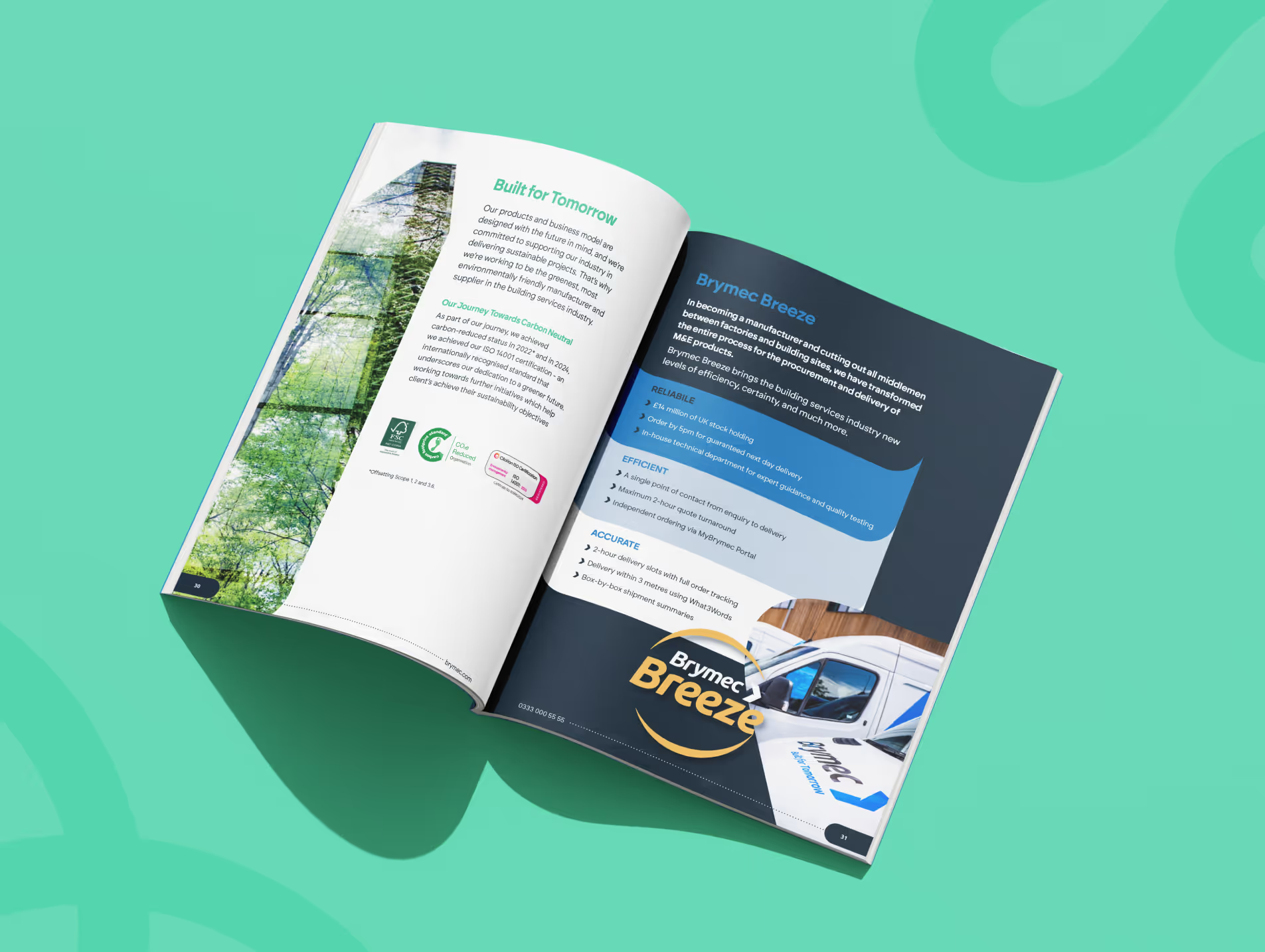
A launch brochure is not just a PDF to email. It is a reference document that needs to work in multiple contexts: on a specifier's desk during scheme design, in a contractor's site office, attached to a tender submission, printed for a client presentation.
That means format decisions matter.
PDF is non-negotiable, but make sure it is optimised: searchable text, logical page breaks, embedded hyperlinks to standards or additional resources. If the brochure is long, include a contents page with hyperlinks.
Print still matters in construction. Specifiers keep reference libraries. Contractors want something they can mark up or leave on site. It is the same reason construction direct mail earns attention — printed pieces hang around in ways an email cannot. A well-designed A4 print brochure, properly bound, has a longer life than a PDF that gets saved to a downloads folder and forgotten.
Consider how the brochure works alongside other specification tools. If you are producing NBS clauses, CAD details, or BIM objects for the same product, reference those in the brochure and explain where to find them. A launch brochure should be the entry point to a coherent set of specification resources, not a standalone island.
Most building product launches are long sales cycles. A specifier might download your brochure during RIBA Stage 2, shortlist the product at Stage 3, and not finalise the specification until Stage 4. That could be six months or more.
Your brochure needs to stay relevant across that timeline. Avoid content that dates quickly: 'new for 2024', 'coming soon', 'launching this spring'. Once the product is established, that language makes the brochure feel stale.
Similarly, avoid structuring the brochure around the launch narrative ('why we developed this', 'the story behind the product'). Specifiers care about outcomes, not origin stories. Lead with application and performance, not process.
Launch brochures also need to be easy to update. If you gain a new certification, add a case study, or extend the product range, you should be able to refresh the brochure without a full redesign. That means planning for version control from the start: clear file structures, modular layouts, and print specifications that allow reprints without restarting from scratch.
A launch brochure should do more than generate initial interest. It should reduce friction in the specification process, give specifiers confidence to shortlist an unfamiliar product, and provide enough technical detail to support conversations with contractors, clients, and building control.
That requires a different approach to structure, content, and design than most sales literature. It requires thinking like a specifier, not a salesperson.
If you are launching a building product and need a brochure that works as a specification tool, not just a marketing asset, we can help. As a creative agency for construction working across the supply chain, we understand what specifiers need and how to structure technical content that supports specification decisions. Get in touch if that sounds useful.


Trusted by 23+ clients